Journalism & Storytelling
We invest in fact-based journalism and storytelling that gives voice to all Chicagoans and strengthens communities across the city.
Every Chicagoan deserves access to accurate, fair, and trustworthy local news. We work to strengthen local journalism and storytelling so that all community stories are told — and heard.
We focus on news outlets that center underrepresented communities, specifically on the South and West Sides, whose coverage enables residents to see themselves, access reliable information, and advocate for meaningful change. Our grantmaking is supported by our strategic partnerships with the MacArthur Foundation and Democracy Fund.
We also invest in broader efforts to rebuild local news across Chicago and the country, including Press Forward — a groundbreaking initiative mobilizing significant philanthropic investment in local journalism, nationally and in Chicago.
On this Page
Strengthens local news production and storytelling to create a more connected and sustainable local media ecosystem
Invests in newsrooms whose coverage enables residents to see themselves, access reliable information, and advocate for meaningful change
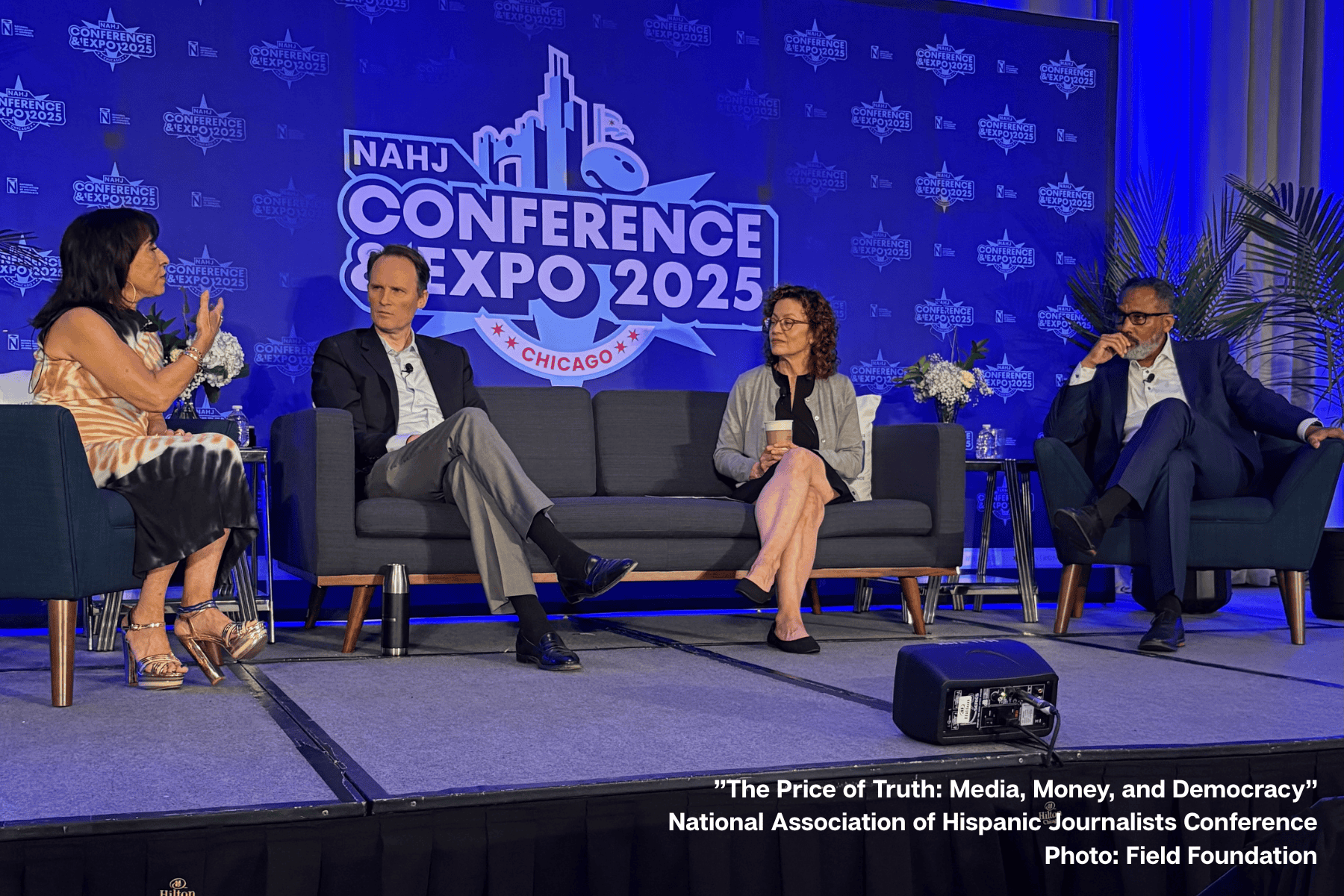
Contributes to broader efforts to rebuild local news across Chicago and the country
Capacity
Building
Central to our work is providing sustainable, multi-year support that helps news organizations grow, adapt, and continue serving their communities.
In 2024, we launched the Field Foundation Journalism & Storytelling Multi-Year Cohort, awarding $75,000 grants — renewable over two years — to four Chicago news outlets that represent the vibrance and innovation of Chicago’s media landscape.
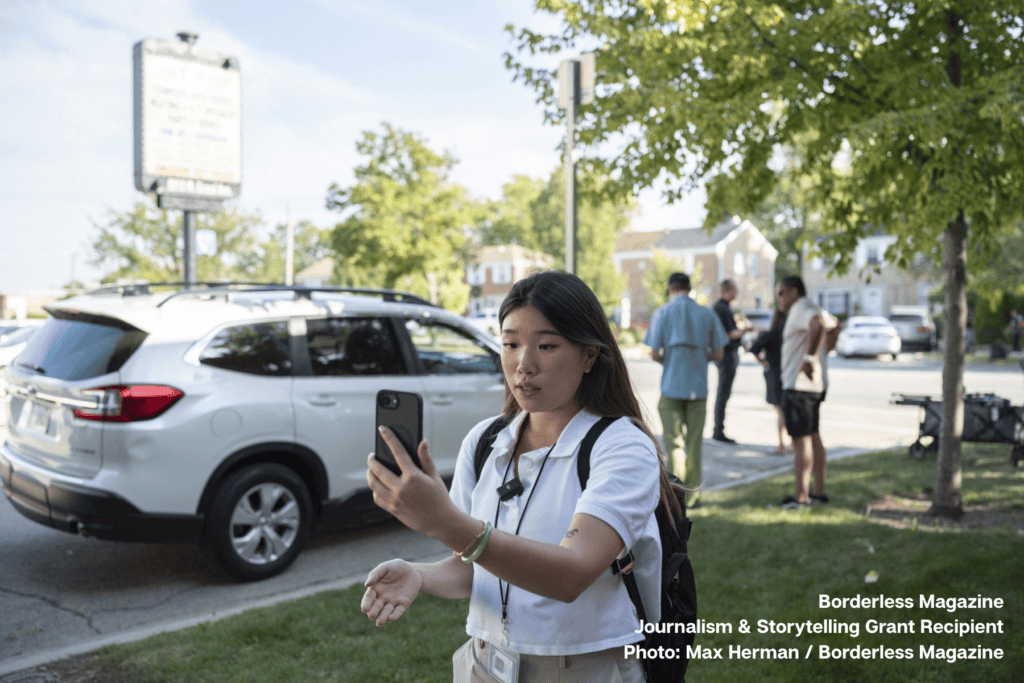
Borderless Magazine: Reimagining coverage of Chicago’s immigrant communities through a multilingual, equity-focused newsroom with content published in English and Spanish, Borderless Magazine has won national recognition for community engagement and innovative reporting.
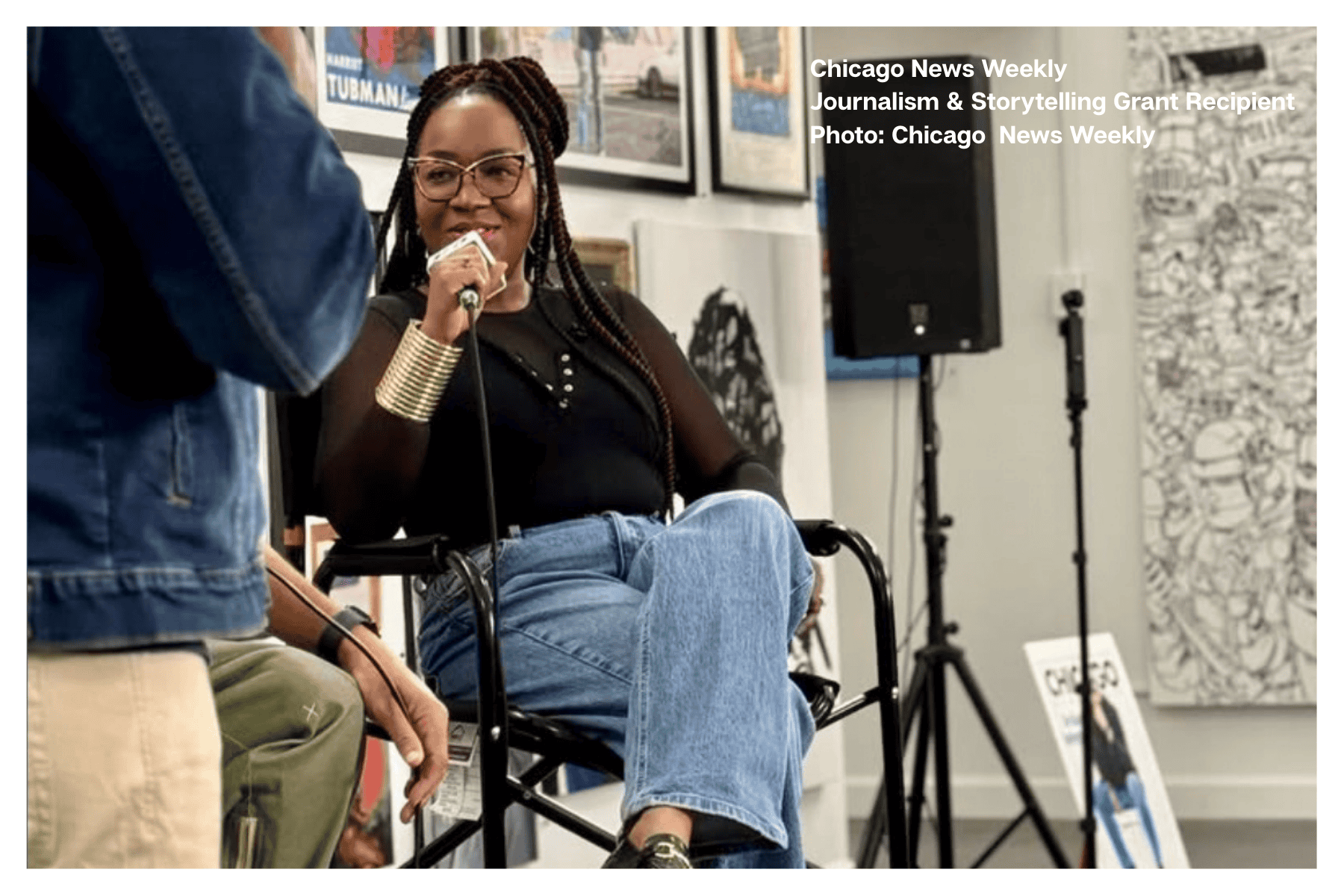
Chicago News Weekly: Founded by the former leaders of the Chicago Defender, Chicago News Weekly addresses information gaps in Black communities. With readership of 100,000+, the outlet provides on-the-job training for early-career journalists and focuses on spurring civic participation.
Investigative Project on Race & Equity: As Illinois’ only news organization dedicated solely to investigative reporting on race and equity, Investigative Project on Race & Equity takes a data-driven approach. Its in-depth investigation on traffic stops and racial profiling has drawn national acclaim.
South Side Weekly : Transforming local news through collaborative journalism, South Side Weekly has a network of 1,500 contributors from 37 communities. The outlet empowers residents to tell their own stories and has ranked third in reader satisfaction among Chicago news outlets.
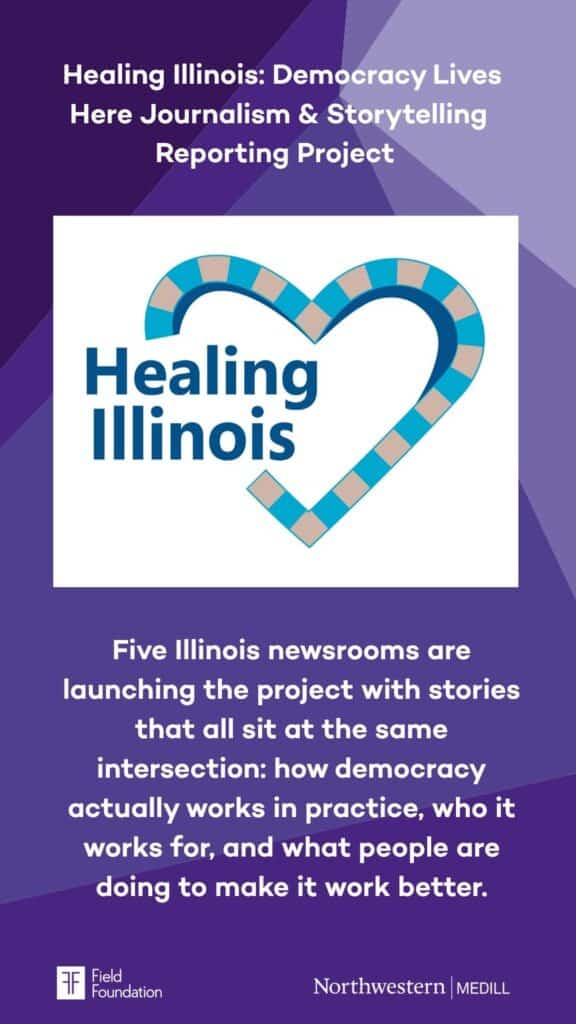
The 2026 Healing Illinois Reporting Project: “Democracy Lives Here” launched in May with five Illinois news outlets—Capitol News Illinois, Chicago News Weekly, Harvey World Herald, Illinois Latino News, and WGLT Bloomington-Normal’s Public Media—publishing hard-hitting news coverage on how democracy actually works in practice, who it works for, and what people are doing to make it work better within and among the state’s diverse communities. The goal: engaging and bringing neighbors together.
This project was managed by the Medill Solutions Journalism Hub and made possible by a grant from Healing Illinois, a racial and community healing initiative from the Illinois Department of Human Services, in partnership with the Field Foundation.
The stories below share a throughline that defines solutions journalism: rigorous reporting on responses to social problems with evidence of what is working, what is not, and why.
Capitol News Illinois reports on how Illinois county clerks are combating election misinformation, examining the procedures, transparency practices and communication strategies that have built and protected voter trust at the local level.
How Illinois County Clerks are Combating Election Misinformation
Illinois County Clerks are Preparing for Mail Voting Amid Continued Attacks, Changes
Chicago News Weekly investigates how Illinois’ vote-by-mail system absorbed quiet but consequential shifts at the U.S. Postal Service. The reporting documents a layered response — drop boxes, a 14-day review window, early-return messaging — that kept Chicago’s rejection rate under 1 percent, while naming who still struggles when the system depends on mobility and timing.
A System That Has Settled—But Has Not Stopped Changing
Harvey World Herald examines how civic content creators in Chicago’s south suburbs are filling the void left by collapsing local papers — livestreaming township meetings, holding officials accountable and helping drive measurable jumps in turnout and public comment. The reporting weighs what these creators do well and where the ethics of audience-driven coverage still need work.
Out of ‘Shared Concern for the Community,’ Southland Influencers Expand Political Awareness
Illinois Latino News profiles Allies United, a Chicago-based coalition that formed after Operation Midway Blitz and now builds long-term, cross-community, civil-rights infrastructure. The story examines how diverse groups translate crisis response into durable political power.
Allies United Holds Cross‑Community Meetings to Protect Civil Rights Across Chicagoland
A Year of Resistance, Advocating for Representation in Legislature, at Latino Unity Day
WGLT Bloomington-Normal’s Public Media publishes a Local Democracy Playbook drawn from Bloomington-Normal residents who have moved the needle on local issues, from stopping a gravel pit near an elementary school to saving fifth-grade band. The piece distills seven transferable tactics.
Local Democracy Playbook: 7 Tips to Get Stuff Done in Bloomington-Normal
Application
Process
We accept applications on a rolling basis. Please note that given our focus on supporting local news outlets, we do not fund documentary work.
When local news is strong, communities are stronger. We invest in the newsrooms making sure the often untold stories of Chicago’s communities belong to the authentic narrative of our city.